
A Consideration of Recent American Policy in the Western Hemisphere, with Particular Reference to the Affairs of Honduras, Venezuela, Cuba, and the Broader Caribbean, as Exemplified in the Bold Actions of President Trump
In this era of instantaneous telegraphic intelligence, of steam-driven fleets and aerial machines that outstrip the swiftest courier of former ages, when the affairs of distant republics may be influenced—nay, even determined—by resolute decisions taken in the capital of a great power, the student of public affairs cannot but fix his gaze upon the Western Hemisphere with the keenest interest and the most profound attention. The policy pursued by the United States since the autumn of 2025 under the direction of President Trump presents a spectacle of strategic foresight, diplomatic subtlety, and, when the moment demanded it, decisive force, that recalls the most celebrated episodes in the annals of statecraft. One thinks inevitably of the delicate balancing of Prince Metternich at the Congress of Vienna in 1815, of Lord Palmerston’s masterful handling of the Eastern Question in the 1840s and 1850s, or of Count Cavour’s audacious strokes that brought about the unification of Italy in the 1860s—yet all these historical precedents are executed here with the instruments and temperament peculiar to a modern republic possessed of unrivalled material resources, unmatched intelligence networks, and a willingness to employ power in measured but unmistakable fashion.
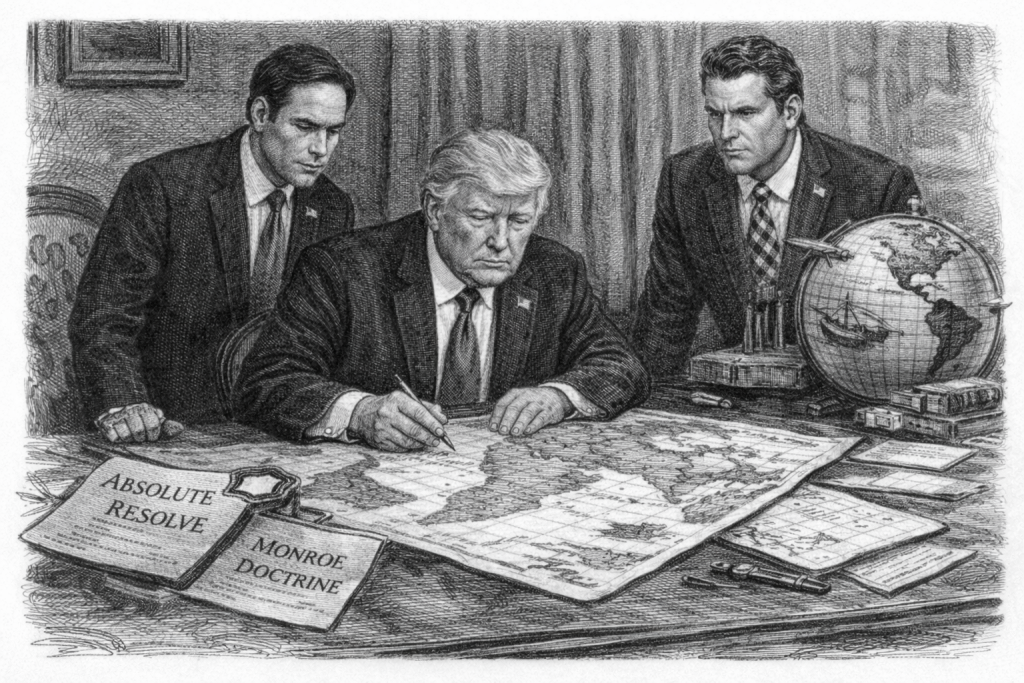
What has been styled in transatlantic circles, after Mr. Trump’s own celebrated treatise published in 1987, “The Art of the Deal,” has now been elevated from the sphere of commercial negotiation and real-estate enterprise to the grander theatre of continental dominion and the reordering of an entire hemisphere. Commencing with the unexpected pardon granted to Señor Juan Orlando Hernández on the 1st of December 2025 (announced amid the distractions of the American Thanksgiving on the 28th of November), proceeding through a sustained campaign of calibrated economic constriction, maritime interdiction, and electronic disruption throughout that month, and reaching its dramatic and decisive climax in the operation designated “Absolute Resolve” on the night of the 2nd–3rd of January 2026—by which Señor Nicolás Maduro and his consort Señora Cilia Flores were removed from authority in Caracas—these events form a continuous, coherent, and remarkably economical narrative. It is a narrative of leverage patiently accumulated over months, of pressure methodically applied until the target regime reached the point of fracture, and of force employed with surgical precision only when every alternative had been exhausted. The whole is guided by a revived and vigorously expanded Monroe Doctrine, now transformed through what American strategists and commentators term the “Trump Corollary” into an explicit and unapologetic assertion of hemispheric pre-eminence that brooks no strategic lodgement by extra-continental rivals—whether Russia, the People’s Republic of China, or the Islamic Republic of Iran.
To appreciate the full depth and breadth of this policy, one must first examine its doctrinal foundations in some detail. The original Monroe Doctrine, enunciated by President James Monroe in his message to Congress on the 2nd of December 1823, was essentially negative and defensive in character: it warned the crowned heads of Europe against any further attempts at colonisation in the Americas or interference in the affairs of the newly independent republics of the New World. For much of the nineteenth century it remained more a statement of aspiration than a fully realised instrument of policy. It was invoked during the French intervention in Mexico under Napoleon III in the 1860s, and again during the Venezuelan boundary crisis with Britain in 1895, when President Cleveland’s administration compelled arbitration. Yet it was often honoured more in the breach than in the observance, as European powers continued to exercise financial and occasionally military influence in the Caribbean and South America.
Theodore Roosevelt’s Corollary of 1904 transformed the doctrine into a justification for American police action to forestall European intervention, leading to repeated occupations of Haiti, the Dominican Republic, and Nicaragua in the early twentieth century. That more interventionist interpretation fell into disfavour after the Good Neighbor policy proclaimed by President Franklin Roosevelt in the 1930s, and was largely abandoned in the postwar era. Now, in the opening days of 2026, the Trump administration has not merely restored the doctrine but extended it into a positive instrument of primacy: the hemisphere is not simply to be protected from outside interference, but actively organised under American leadership to exclude any strategic foothold for powers whose interests are deemed hostile to those of the United States. The National Security Strategy document promulgated in the spring of 2025 explicitly designates “unchallenged predominance in the Western Hemisphere” as a vital national interest, on a par with the security of the homeland itself. To this end, it announced the reallocation of significant military assets from European and Indo-Pacific commitments—insisting that traditional allies assume greater responsibility for their own defence—and the concentration of augmented forces in the Caribbean basin: an additional fifteen thousand troops, multiple squadrons of the advanced F-35 strike aircraft, long-range B-1 bombers, and carrier battle groups positioned for rapid deployment to any point from the Gulf of Mexico to the northern coast of South America.
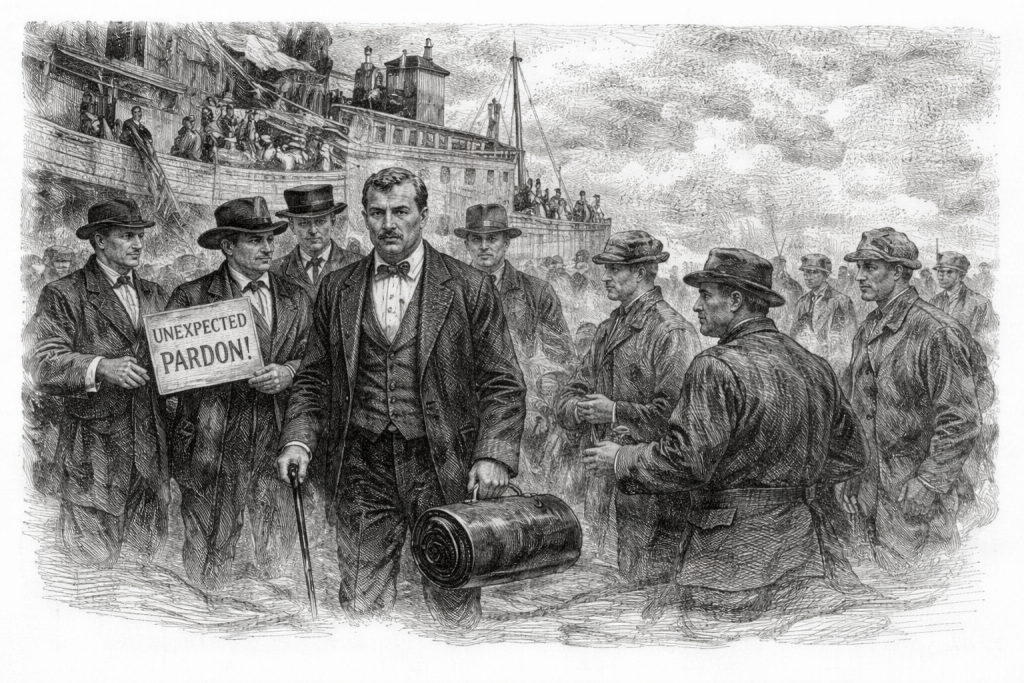
The opening gambit in this ambitious design was the pardon of Señor Juan Orlando Hernández. Tried and convicted in a federal court in New York in 2024 for his role in transforming Honduras into a virtual narco-state—accepting millions of dollars in bribes from trafficking organisations, facilitating the transit of hundreds of tonnes of cocaine destined for the United States, and, as the trial evidence starkly revealed, even boasting to associates that he would “stuff the noses of the gringos” with product to mislead law enforcement—Hernández had been sentenced to forty-five years’ imprisonment in a maximum-security facility. His sudden pardon, announced on the 28th of November 2025 and formally granted on the 1st of December, struck many observers on both sides of the Atlantic as a grave affront to the principles of justice and an embarrassing capitulation to expediency. Former drug-enforcement administrators in Washington voiced indignation; opposition politicians in Honduras and abroad decried it as proof that American policy had become cynical beyond redemption.
Yet, when examined in the broader context of hemispheric strategy rather than narrow legalism, the pardon reveals itself as a masterstroke of calculated leverage—one that cost almost nothing in domestic political capital while yielding substantial strategic options. The American electorate, absorbed in its own concerns of economy and border security, scarcely registered the name of Hernández or the intricacies of Central American politics. The benefit, however, was immediate and concrete. The Honduran general election held on the 30th of November 2025 had produced a contest of exceptional closeness between Señor Nasry “Tito” Asfura, Hernández’s political heir and standard-bearer of the National Party, and a fragmented opposition field led by Señor Salvador Nasralla of the Liberal Party, with the leftist candidate Señora Rixi Moncada trailing distantly. Initial returns oscillated wildly; allegations of irregularity proliferated; certification of results was delayed for weeks amid mounting tension.
Hernández’s repatriation enabled him to mobilise residual networks of loyalty on Asfura’s behalf. On the 24th of December the National Electoral Council finally declared Asfura the victor by the narrowest of margins—40.3 per cent to Nasralla’s 39.5 per cent—sufficient, however, to shift Honduras decisively from an equivocal and occasionally troublesome neutrality (tinged with covert Venezuelan influence) to firm alignment with Washington. Commitments followed swiftly: enhanced cooperation in interdicting trafficking routes, improved intelligence sharing, and quiet but serious discussions of potential basing rights for American naval and aerial forces. Thus, at the cost of a single controversial signature, a potential weak link in the regional chain was converted into a strategic asset, tightening the ring of encirclement around the Maduro regime in Caracas. Even had the electoral count gone the other way, accusations of manipulation orchestrated by Maduro’s agents would have furnished ample pretext for the withholding of economic aid and the positioning of naval forces as a visible admonition; in every conceivable contingency, the American position was strengthened. This is the essence of negotiating from strength: protect the downside rigorously while leaving the upside unlimited.
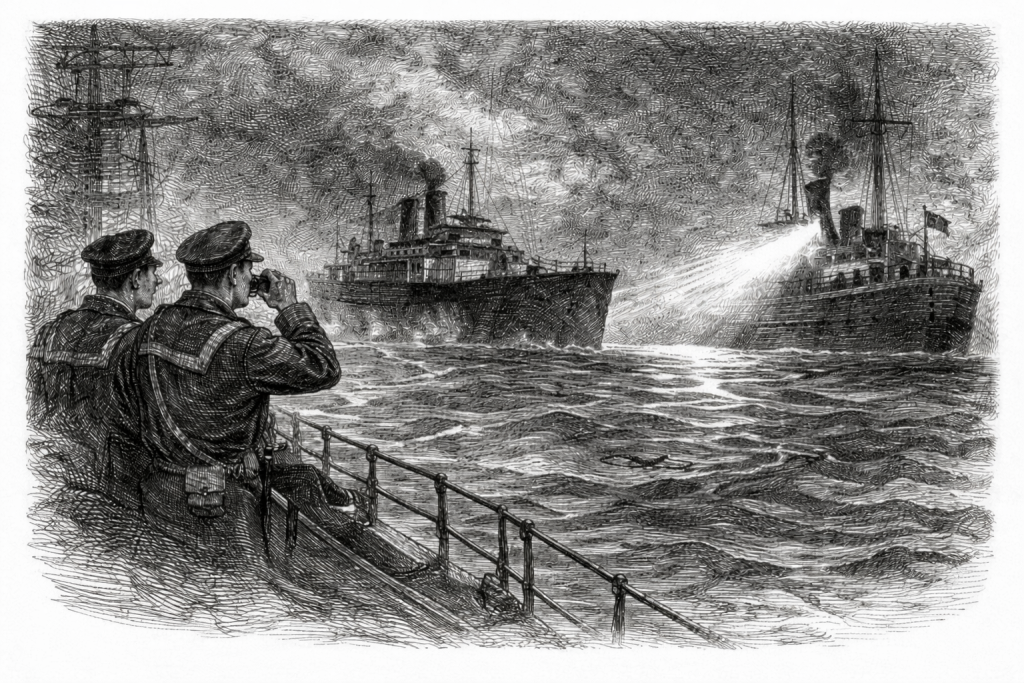
With Honduras secured, the pressure upon Venezuela intensified along multiple axes. “Operation Southern Spear,” formally initiated in early December 2025, represented a sophisticated integration of maritime interdiction, electronic disruption, and precisely targeted economic sanctions—a modern analogue to Britain’s highly effective blockade strategy against Napoleonic France, yet executed with the precision made possible by satellite surveillance, unmanned aerial systems, and real-time intelligence fusion. Over the course of the month, more than twenty-eight vessels suspected of narco-trafficking or sanctions evasion were either struck by precision munitions or boarded and seized. Notable among these was the tanker M/T Skipper, linked to Iran’s Revolutionary Guard Corps, intercepted on the 10th of December with cargo valued between fifty and one hundred million dollars. Further boarding operations followed on the 20th. Concurrently, electronic-warfare measures disrupted GPS signals across broad swathes of Venezuelan airspace, causing near-collisions, flight cancellations, and a palpable sense of vulnerability among the regime’s leadership.
Crucially, the operation preserved selective exemptions for licensed commercial activity—most importantly Chevron’s production of approximately three hundred thousand barrels per day—ensuring that oil continued to flow but that Venezuela’s state company PDVSA received payment in crude rather than cash, thereby denying the regime hard currency while maintaining an American stake in the fields for the inevitable post-Maduro era. This delicate calibration—starving the adversary of resources while preserving assets for future exploitation—demonstrates a level of strategic sophistication rarely seen in great-power practice.
The campaign was greatly assisted by a simultaneous and dramatic wave of conservative electoral success across the South American continent. In Chile, Señor José Antonio Kast secured a resounding 58 per cent of the vote in the presidential contest of the 14th of December; in Ecuador, Señor Daniel Noboa consolidated his position through legislative gains; in Bolivia and several smaller republics, right-leaning administrations prevailed against fragmented leftist oppositions. Nine such governments now predominate from the Andes to the Southern Cone, united by a common revulsion against violent crime, uncontrolled mass migration, and decades of economic mismanagement under populist regimes. Their collective stance has effectively isolated the remaining leftist holdouts, leaving Maduro’s Venezuela increasingly friendless and exposed on its own continent. Within Venezuela itself, reputable independent polls conducted prior to the widely disputed election of 2024 had shown the unified opposition candidate Señor Edmundo González leading by margins as high as 67 to 30 per cent; Maduro’s continuation in office rested not upon any genuine popular mandate but upon systematic coercion, electoral manipulation, and the support of imported Cuban security personnel.
It was precisely this interdependence with Cuba that proved the regime’s most critical vulnerability. Since the heyday of Hugo Chávez’s “Bolivarian revolution” in the early 2000s, Venezuela has supplied subsidised petroleum to Havana—peaking at one hundred thousand barrels per day in better times, and even in recent years rarely falling below thirty or fifty-five thousand—in exchange for Cuban expertise in internal security, intelligence, public health administration, and the maintenance of repressive apparatus. This expertise has been indispensable in enabling the Maduro government to suppress domestic dissent and survive repeated waves of protest. By progressively throttling this lifeline through the measures described above, the American operation precipitated a crisis in Cuba more severe than the notorious “Special Period” that followed the collapse of Soviet patronage in the early 1990s.
Dispatches reaching European and American capitals in the closing days of December 2025 painted a picture of acute distress: streets in Havana and provincial cities choked with uncollected refuse that bred epidemics of dengue fever and chikungunya; electrical blackouts lasting eighteen hours or more on most days; an accelerating exodus of 2.7 million citizens since 2020—predominantly the young, educated, and skilled; an estimated economic contraction of fifteen per cent since 2018; cumulative inflation exceeding four hundred and fifty per cent over the same period; fully ninety per cent of the population living in conditions classified as extreme poverty, with seventy per cent of households unable to afford even one proper daily meal. Demographers and economists speaking to reputable journals described the phenomenon as a “demographic hollowing out” comparable only to nations emerging from prolonged conflict. While the humanitarian suffering is undeniable and deeply regrettable, it must be recognised as the direct and foreseeable consequence of a regime that has clung rigidly to failed centralised doctrines rather than undertake meaningful reform; the American measures merely accelerated an inevitable reckoning that had been postponed for decades by external subsidies.
Throughout the month of December, repeated and carefully structured opportunities were extended to the Maduro circle for a dignified and orderly exit. These included internationally supervised elections under impartial observation, the closure of all Russian and Iranian military or intelligence facilities on Venezuelan soil, and equitable (though heavily American-favouring) concessions for the development of the vast Orinoco heavy-crude reserves, in return for safe exile in comfortable third countries—options mentioned included Dubai, Antalya in Turkey, or even Belarus—together with partial restoration of sequestered personal assets through secure cryptographic channels and guarantees of immunity for the inner circle and their families. Maduro’s persistent and defiant refusal of these overtures, despite their increasing generosity, left the American administration with no honourable alternative but direct action.
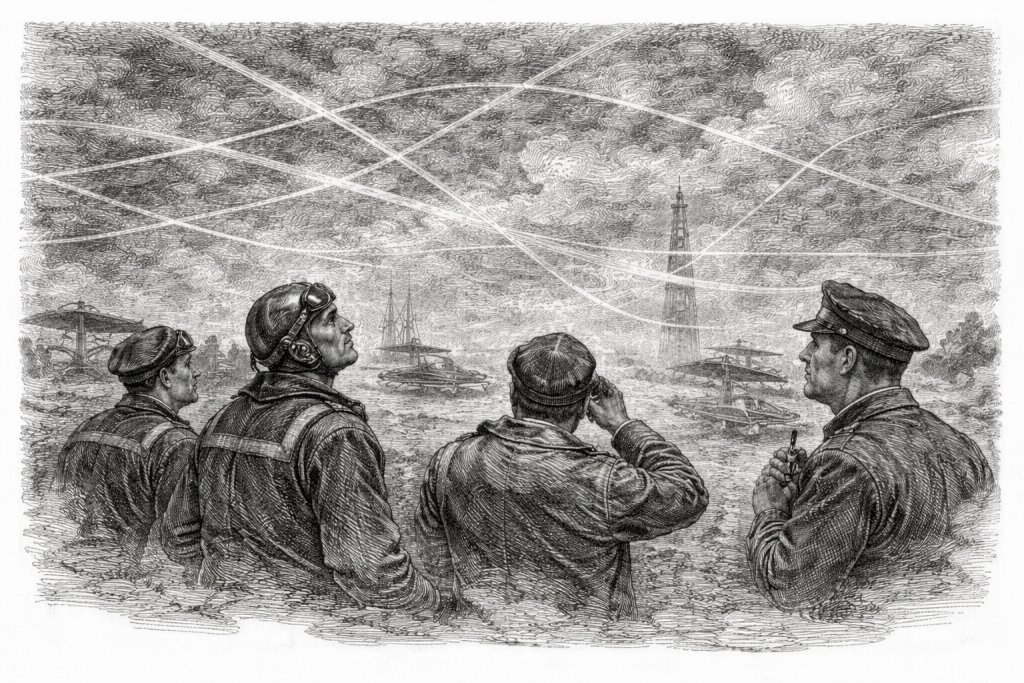
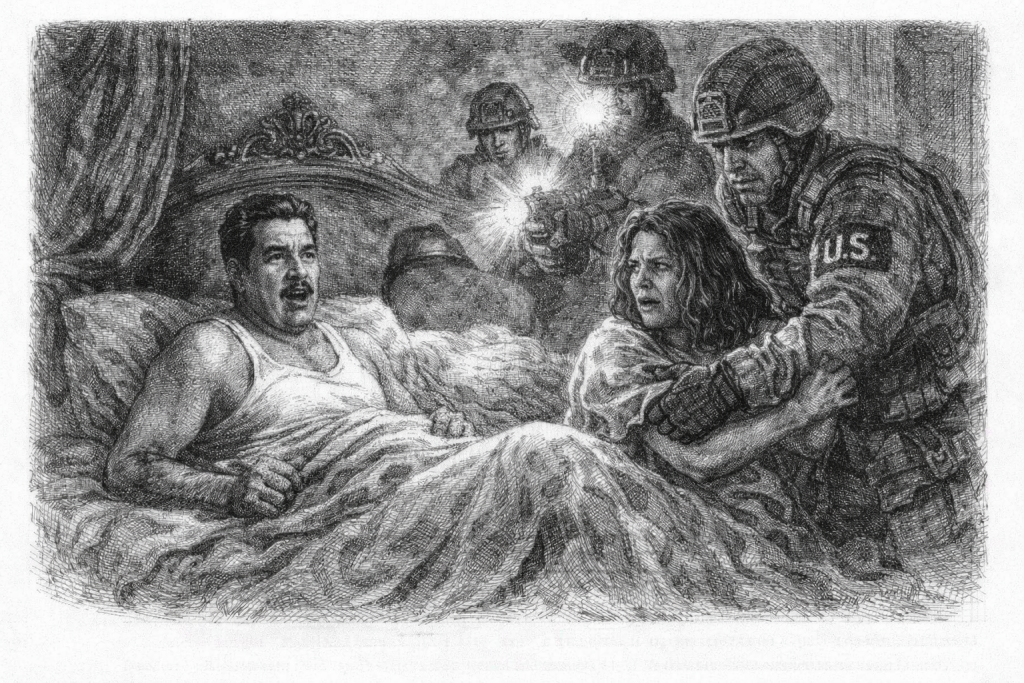
Thus, on the night of the 2nd–3rd January 2026, “Operation Absolute Resolve” was launched with a coordination and efficiency that will doubtless be studied in military academies for generations. Elite units of the Delta Force, supported by precision airstrikes delivered against carefully selected military installations—Fuerte Tiuna barracks outside Caracas, La Carlota airbase, and defensive positions ringing the Miraflores presidential palace—executed a lightning seizure of the palace complex. Señor Maduro and Señora Cilia Flores were apprehended without the loss of a single American life, though some Venezuelan guards sustained injuries in the brief exchange of fire. The prisoners were immediately transferred to the amphibious assault ship USS Iwo Jima waiting offshore, where they remain in maritime custody pending the filing of expanded indictments originally issued in 2020. These now encompass not only long-standing charges of narco-trafficking but documented operational ties to organisations designated as foreign terrorist entities—remnants of the FARC, the ELN, elements of Mexico’s Sinaloa Cartel, and the increasingly notorious Tren de Aragua gang—with the standing bounty doubled to fifty million dollars.
The regime’s highly personalised and vertical command structure, built almost entirely around Maduro’s individual authority and charisma, collapsed with astonishing rapidity once that centre was removed. Defections cascaded through the officer corps within hours; the paramilitary colectivos that had long served as enforcers melted away or stood down; state television and radio transmissions ceased abruptly, leaving only silence on the official frequencies. Figures such as Vice President Delcy Rodríguez and National Assembly president Diosdado Cabello, though senior in nominal rank, lacked either the popular following or the coercive leverage necessary to rally any coherent resistance. The entire operation bore striking resemblance to the swift and limited American action that removed General Manuel Noriega from power in Panama in December 1989: framed legally as the arrest and extradition of an indicted fugitive rather than a full-scale invasion, executed with minimal collateral damage, and concluded before any organised opposition could materialise.
Into the resulting institutional vacuum steps Señora María Corina Machado—a figure whose democratic legitimacy is as unimpeachable as her personal courage is admired across the political spectrum. Having swept the opposition primaries of 2023 with over ninety-two per cent of the vote, she subsequently unified the anti-Chavista forces behind the candidacy of Edmundo González for the contested election of 2024 (an election widely regarded by international observers as stolen through systematic fraud), and was awarded the Nobel Peace Prize in October 2025 in recognition of her decades of non-violent advocacy for democratic restoration. Current independent polling indicates that between seventy and eighty per cent of Venezuelans who do not identify as Chavistas regard her as the rightful leader of the transition. Her publicly declared programme is ambitious and market-oriented: radical liberalisation of prices and exchange rates, sweeping privatisation of state enterprises, aggressive incentives for the return of the ten-million-strong Venezuelan diaspora, dismantlement of the labyrinthine system of controls that has strangled economic activity for two decades, and even the establishment of special charter cities in the underpopulated Guayana region modelled on successful experiments in prosperty-friendly governance elsewhere. This agenda aligns closely with American interests in regional stability, energy security, and the restoration of Venezuela as a reliable commercial partner.
The Trump administration has pledged close oversight during the transitional period, together with a commitment to hold free and fair elections under international supervision within six to twelve months, and—most significantly—substantial financial and technical assistance, running into many billions of dollars, for the urgent rehabilitation of Venezuela’s decayed petroleum infrastructure. With proven recoverable reserves estimated at more than three hundred billion barrels of heavy crude—the largest in the world—this assistance positions the country to resume its historic role as a major supplier to global markets under terms far more favourable to international investors than those imposed during the Chávez-Maduro era.
The consequences of this transformation extend far beyond Venezuela’s own borders and will reshape the strategic landscape of the entire hemisphere for years to come. In Cuba, the abrupt and near-total termination of subsidised Venezuelan oil portends what analysts are already calling a “Special Period 2.0” of even greater severity than its 1990s predecessor: electrical blackouts likely to lengthen to eight, ten, or twelve hours daily, near-total paralysis of what remains of public transport and industrial agriculture, further collapse of already strained hospitals amid ongoing epidemics, and an intensification of the migratory exodus that may soon overwhelm the capacity of neighbouring states to absorb. Whether this mounting pressure precipitates internal upheaval, a hardening of repression, or—perhaps most likely—a tentative opening toward limited private enterprise and normalisation with the United States remains to be seen, but the margin for independent manoeuvre available to the Havana regime has shrunk dramatically almost overnight.
To the People’s Republic of China, which only days before the Caracas operation had issued public reaffirmations of “unbreakable brotherhood” with the Maduro government and positioned itself as Caracas’s principal financial backer, the events deliver a stark message: multi-billion-dollar loan portfolios extended to Venezuela now face imminent default and will require renegotiation on terms far less advantageous than originally envisaged. To the Islamic Republic of Iran, whose Revolutionary Guard Corps and Hezbollah proxies have long used Venezuelan territory as a convenient platform for sanctions evasion, money laundering, and logistical support, the message is equally unequivocal: those networks have been severed at their root. Across the broader Americas, the new predominance of nine conservative and market-oriented governments—from the Southern Cone to Central America—reorients economic and security cooperation decisively toward Washington. Pressures of irregular migration ease as orderly governance returns to troubled states; flows of legitimate investment are redirected toward jurisdictions offering legal certainty and property rights; prospects for innovative experiments such as charter cities and special economic zones brighten considerably.
Critics, both within the United States and abroad, will doubtless decry these developments as an unacceptable assertion of imperial preponderance, a flagrant violation of national sovereignty, or a selective and hypocritical application of international legal principle. Humanitarian concerns over the suffering inflicted upon ordinary Cubans by the intensified embargo cannot be lightly dismissed, nor can questions about the consistency of pardoning one indicted narco-facilitator while pursuing another with such determination. Yet in the unforgiving arena of great-power politics, nations act first and foremost to secure what they deem their vital interests: the exclusion of hostile strategic presences from regions proximate to their own territory, the suppression of trafficking networks that corrode public health and social order within their borders, and the promotion of stable, prosperous governance conducive to legitimate commerce and regional tranquillity. The United States, possessing unmatched military, economic, and intelligence resources in its own hemisphere, has discharged these responsibilities with a degree of restraint, precision, and ultimate efficacy that contrasts favourably with the protracted, costly, and often inconclusive expeditions undertaken by former European empires—whether Britain’s protracted entanglements in the Boer War at the turn of the last century or Russia’s disastrous misadventures in the Crimea in the 1850s.
As the year 2026 commences, the political map of the Americas presents a profoundly altered aspect: conservative and market-oriented administrations ascendant from Tierra del Fuego to the Rio Grande; extra-hemispheric intrusions sharply curtailed if not altogether eliminated; prospects for orderly development, energy abundance, and rising prosperity markedly enhanced across a continent that only months ago appeared mired in stagnation and ideological division. Whether this new configuration—the “Art of the Hemisphere” in its fullest expression—will prove enduring depends in large measure upon the prudence and statesmanship with which the reconstruction phase is now conducted: upon the strengthening of independent institutions rather than personalist rule, upon the reconciliation of deep social divisions rather than their exploitation, upon the harnessing of immense natural wealth for broad public benefit rather than renewed elite capture, and upon the resistance of any temptation to revert to authoritarian habits under new guises.
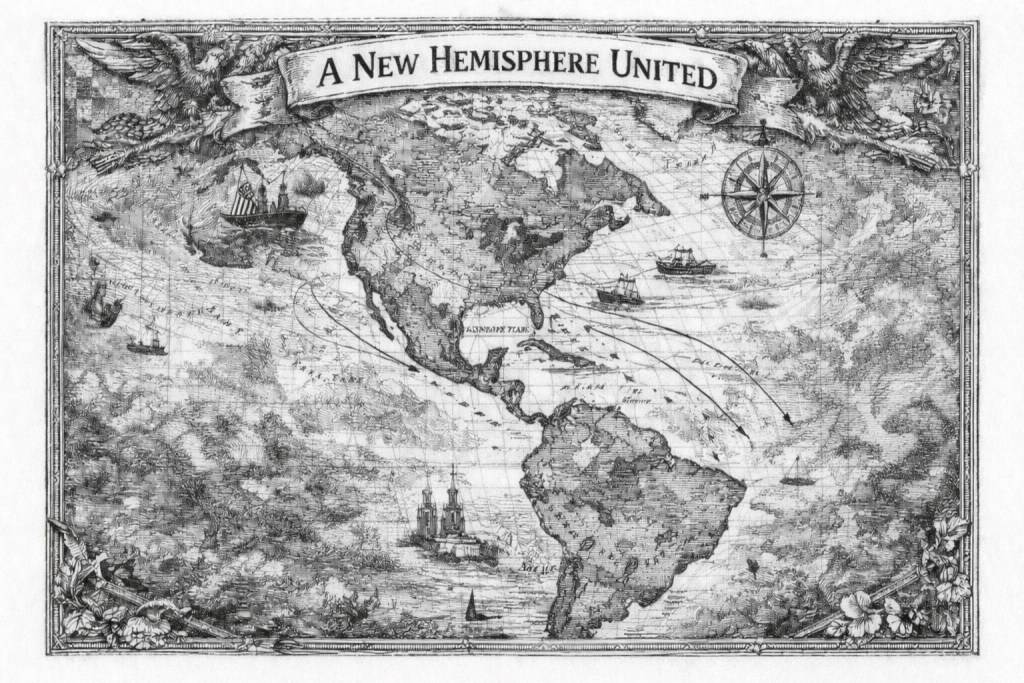
Yet even should unforeseen challenges arise in the months and years ahead, the events of the past ten weeks stand as a remarkable and instructive demonstration of how foresight, patient accumulation of leverage, carefully calibrated escalation of pressure, and—when all else had failed—decisive and precisely applied force may succeed in reshaping an entire continent without plunging it into the prolonged calamities and incalculable human costs of general war. The Monroe Doctrine, once little more than a parchment barrier occasionally invoked in diplomatic notes, has been forged anew into a living instrument of active primacy; and the Western Hemisphere, for the first time in more than a century, appears united under a single predominant and unchallengeable influence.
Observers in this kingdom, long accustomed to weighing the delicate equilibria of power in distant quarters—from the perennial Eastern Question to the partitions of Africa and the scramble for concessions in China—may draw profitable and sobering instruction from these proceedings as they reflect upon the responsibilities, the opportunities, and the undeniable burdens attendant upon the exercise of great power in an age of global interconnection and instantaneous communication. The lessons of the Art of the Hemisphere will echo far beyond the shores of the Caribbean and the peaks of the Andes.